Artistically, Makom Sameach (Happy Place) transforms the worn, everyday fragments of life into something almost poetic. Noa Koller and Ram Nehari build a world that moves fluidly between dark humor and existential pain, where the ordinary details of family, aging, desire, and emotional exhaustion become the raw material of the series. Critics have described the show as taking “the worn tools of reality and turning them into poetry,” and this is precisely where its artistic strength lies.
Cinematically, the series is grounded in intimacy and emotional realism. The camera often stays close to the characters, allowing domestic spaces, gestures, and silences to carry as much meaning as dialogue. The visual language feels deeply human — unpolished in the best sense — mirroring the instability, longing, and emotional fragmentation of midlife. Conceptually, what makes the series so compelling is the way it explores emptiness, care, and the fear of stagnation through deeply personal relationships, turning the family unit into both a site of comfort and a source of suffocation.
What inspires me most about Makom Sameach is its ability to reveal human complexity through the ordinary. I’m especially drawn to the dialogue, the humor that exists within pain, and the unpolished way the series observes everyday life. It transforms familiar, almost mundane moments into experiences that feel emotionally layered and deeply human.
What stayed with me most is the way the characters resist simple definitions. None of them are entirely good or bad, whole or broken. Each one moves through a deeply personal journey, carrying beauty, flaws, tenderness, and contradiction all at once. This nuanced way of portraying people as layered, imperfect, and constantly evolving deeply resonates with the way I think about human stories and the worlds I create.
Noa Koler
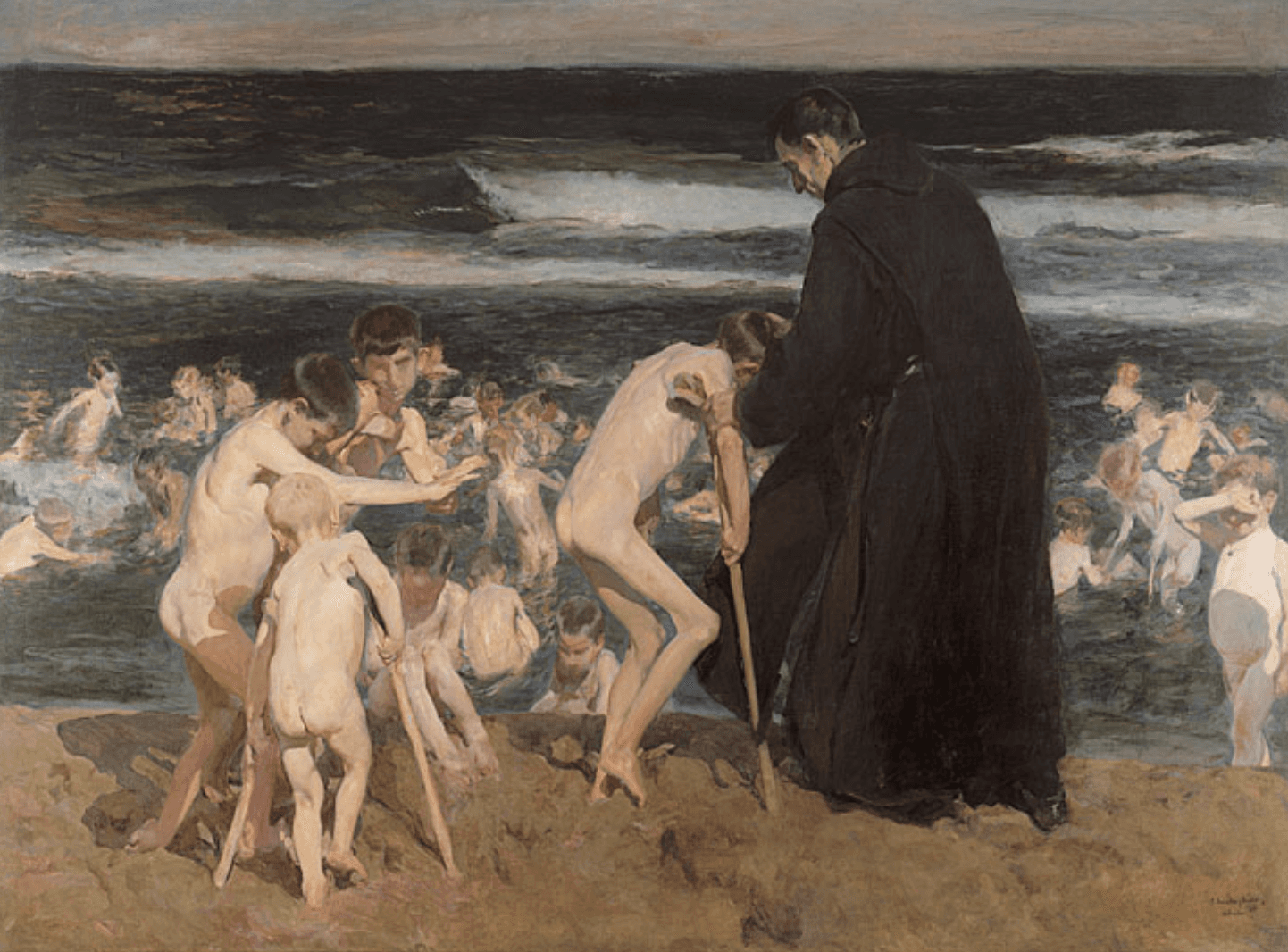
1899
Sad Inheritance! (Spanish: ¡Triste herencia!) is an 1899 oil painting by Spanish artist Joaquín Sorolla.