


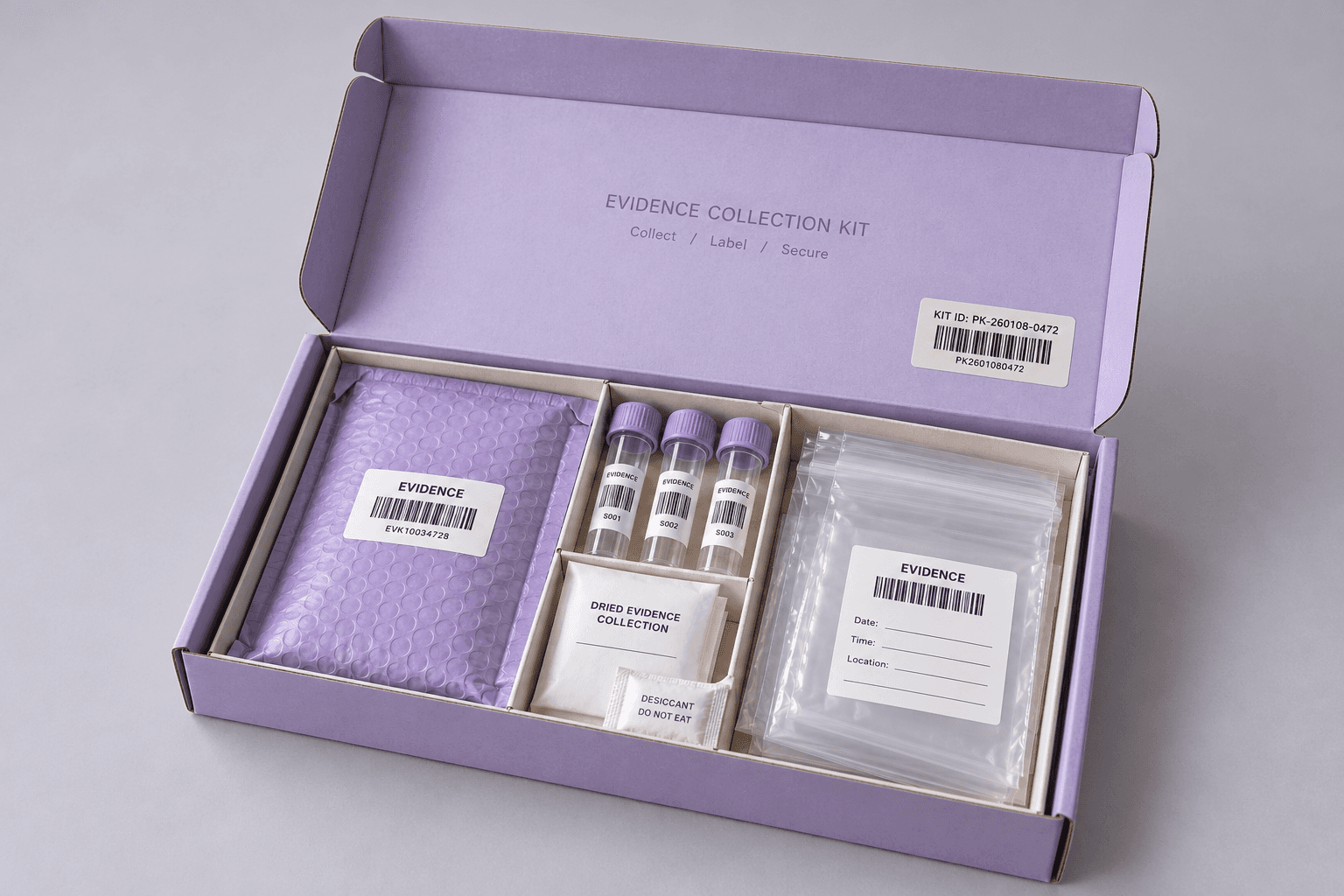
The key challenge was translating a complex forensic and emotional process into a clear, step-by-step user journey. Beyond the evidence collection itself, a major challenge was maintaining maximum sensitivity throughout every stage of the experience, from language and visual tone to the structure of each interaction. The interface had to remain clear and actionable under high emotional stress, while preserving a strong sense of trust, privacy, and control, ensuring users never felt overwhelmed, judged, or retraumatized by the process.
The thinking process centered around how forensic evidence could be preserved clearly, safely, and accurately in a high-stress situation, while ensuring that the overall experience remains emotionally sensitive and non-intimidating during a traumatic moment.
A key question was how an AI-led conversation could feel personal, supportive, and non-judgmental rather than cold or mechanical, and whether a conversational flow could provide step-by-step guidance while reducing stress and cognitive overload.
At the same time, I explored how the physical kit should be organized to support intuitive evidence collection, secure storage, and a careful balance between empathy, dignity, and forensic reliability.
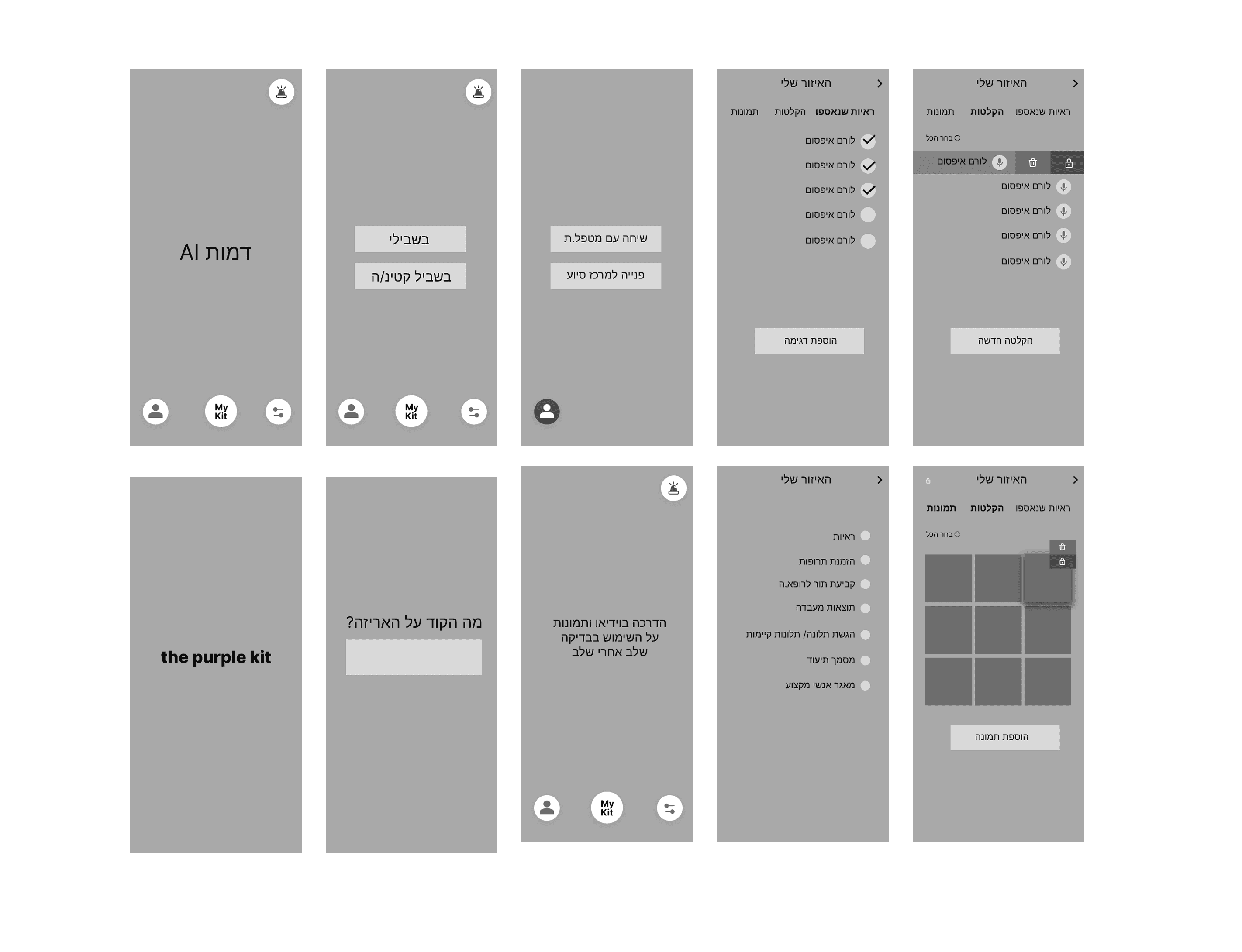
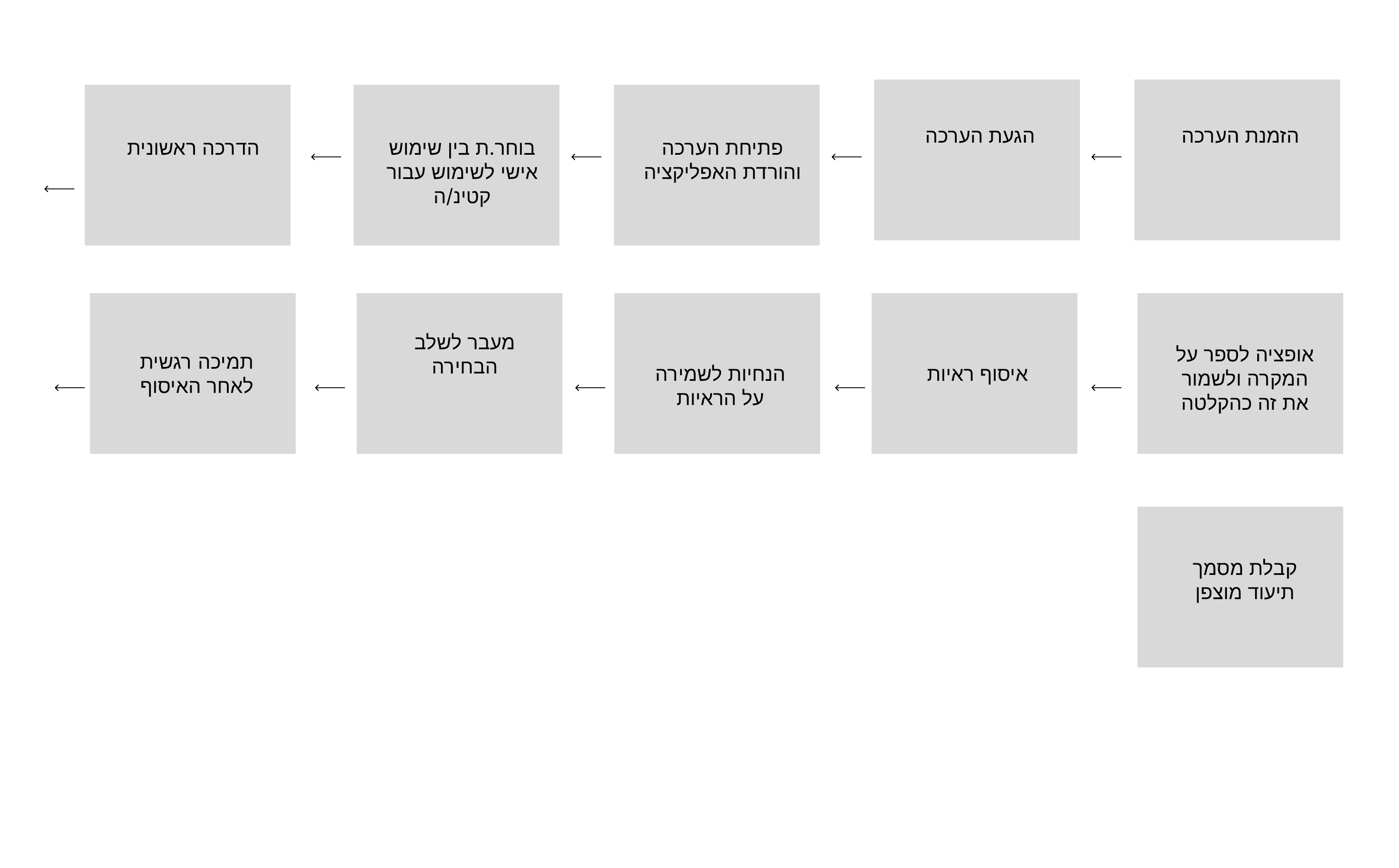


The solution was designed as an integrated digital and physical experience that rethinks evidence collection through a trauma-informed, user-centered approach.
A home forensic kit enables clear and intuitive evidence preservation, while the companion AI app guides users through each step in a calm, personalized, and non-judgmental flow. By combining accessibility, emotional support, and forensic reliability, the system transforms a traditionally overwhelming process into one that restores agency, clarity, and trust.
